International · Budapest, Hungary
How the British International School Budapest gives every child a say across 60 to 70 nationalities
Louise Russell was handed a folder of minutes and a student council of a few elected children, in a school where pupils come from around 60 or 70 countries and families arrive and leave on two and three year contracts. This is what she built instead, and what an international school gets out of it.
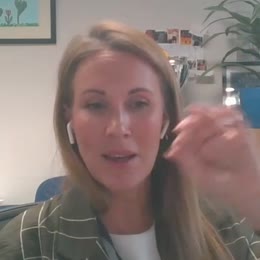
“It helps us to build that more connected inclusive school community, whether they just arrived in our school or they've been here for years.”
Louise Russell, Year 5 teacher and Primary Personal Development and Wellbeing Lead, The British International School, Budapest
- School
- The British International School, Budapest
- Setting
- British international school, ages 3 to 18
- Countries represented
- Hovers around 60 or 70
- Running since
- 2019
The situation
Louise Russell has been teaching for over 20 years. She trained in the north of England, taught in Leeds city centre, then heard about international schools and took a job at the British International School in Ho Chi Minh City in 2003. She has not really looked back. She is now a Year 5 teacher and primary personal development and wellbeing lead at the British International School in Budapest, on the Buda side of the river.
The school takes students from three to 18. As a British school it follows the British curriculum for English and maths, with more flexibility elsewhere, and a standing instruction to itself not to be too Anglo-centric, because its children are not.
It's so diverse in the languages. Obviously a lot of our children are bilingual or trilingual, which, as a Brit who is pretty terrible at languages, is just absolutely astounding. Louise Russell, Year 5 teacher and Primary Personal Development and Wellbeing Lead
The last count of nationalities hovers around 60 or 70. It is also a transient community: families come and go on contracts that may be only two or three years long, so part of the school is always new.
Louise did not choose the student council. She took the PSHE lead, and shortly afterwards the teacher running the council left, so it came to her. What she inherited was the traditional model, a group of elected students meeting once a week to represent everyone else. They tried hard and had some small successes, but the pattern was familiar.
It dwindled, and then there's just really a handful of dominant voices that were the ones who were representing the school and making the decisions. Louise Russell, Year 5 teacher and Primary Personal Development and Wellbeing Lead
Meetings were regular in September and sporadic by the summer, and it was not always clear what impact they had. The handover was honest about the cost:
She said, look, it's actually really hard. It's pretty tough. It takes out your lunch break and you need to really keep them motivated. And it was like, good luck. Louise Russell, Year 5 teacher and Primary Personal Development and Wellbeing Lead
Louise is a full-time class teacher with curriculum responsibilities, so her requirement was specific: reach far more children than the old council, without wiping out her time. A lot of Googling later she found Smart School Councils, came to the UK for training in early July, and started in 2019.
What they built
Staff first, then children, then a small question
Nothing launched in week one. Louise used the INSET days before the children returned to run a session with staff on how the new approach would work and how it would develop children's communication skills. Then she did the same with the pupils: assembly time to explain it, and an open door in her classroom for anyone who wanted to hear about the leadership roles.
Only then did the first question go out, and it was deliberately trivial. Where should the communication board go? Small, achievable in days, and chosen to build trust before anything harder was asked.
A comms team recruited from Year 5 upwards
The comms team is the small pupil leadership group that sets the question every class answers and decides what is done with the results. At the British International School it takes children from Year 5 and Year 6, the age where Louise judges they can carry that level of responsibility, and they apply for the role.
She is straightforward that it took time. For the first two or three years the team needed a lot of support and input. Continuity fixed that: as the Year 5s moved up they began inducting the children behind them, and now Year 5s arrive at her door asking to join, because they have watched the team work for years.
A 15-minute class meeting in the timetable
The class meeting runs across primary, from the youngest children up to Year 6, and it lives in the timetable rather than in the gaps. That decision came in the second or third year, and Louise names it as the thing that made the difference.
You've got to put it in the timetable, you've got to make space for it, because if you don't, it's one of those things that can easily be pushed out of the way. Louise Russell, Year 5 teacher and Primary Personal Development and Wellbeing Lead
Sitting a 15-minute slot between a maths lesson and a languages lesson does something to its standing. Children now query why maths is overrunning, because the class meeting should be starting. Classes rarely skip it now.
Two things make 15 minutes enough in a school with this much language diversity. The children know how the meeting runs and what each slide will say, so the format stops being the obstacle and the time goes on the question. And it is not a performance.
They know that this is an opportunity for them to express that in a really safe environment where there's no judgement, and they can say how they feel and they know it's going to be heard and listened to. Louise Russell, Year 5 teacher and Primary Personal Development and Wellbeing Lead
Where children have extra ideas the meeting runs longer, and Louise does not want staff treating that as lost time. The debate is the point.
Action teams, the part still being worked on
Louise is candid that action teams are the school's biggest current challenge, and suspects that is true elsewhere too.
While they're not always successful, they are a place where students learn to lead, they learn to collaborate, they learn to problem solve, and even when they don't achieve their goals, the students learn resilience and reflection. Louise Russell, Year 5 teacher and Primary Personal Development and Wellbeing Lead
The harder adjustment has been for the adults. Stepping in when a pupil team struggles feels like help, and staff have had to learn that it undermines the children's leadership and their confidence. The shift is towards coaching: what is your next step, how could your approach be different next time.
What changed
The clearest test case is Football Free Friday. The pitch was the only space to run around freely, and it was dominated by footballers. The school asked whether Friday should be football free, and the majority said yes. A small group of very committed footballers did not accept it quietly. They came to Louise's room at break, and every time another class ran a persuasive writing unit she got letters arguing for football back. It is a hard lesson in being in the minority, and Louise treats it as one.
The school kept re-running the question each year. This year the answer flipped, after the play space was rebuilt over the summer and more girls started playing.
We assumed as teachers that it would just be majority vote, that the students would again want to keep that space free on a Friday. But not the case. We don't necessarily know what's best, and they've told us what they want. Louise Russell, Year 5 teacher and Primary Personal Development and Wellbeing Lead
Beyond the playground, pupil decisions have shaped sustainability initiatives, school events and the charities the school supports. The house system was rebranded entirely through the student council: children chose the house names, designed the merchandise, decided which items should be made first, and chose which charities the profits go to.
The change Louise values most is that it stopped being a project. COVID interrupted the early years, with classes and then the whole school in and out of lockdown, but the school came back to it.
It's become an integral part of our school culture. It's not seen as an add-on, it's not seen as just a school project. It's just how we ensure our student voice is heard and how it's acted upon. Louise Russell, Year 5 teacher and Primary Personal Development and Wellbeing Lead
That matters more in an international school than it might elsewhere. When much of your community is away from home, and families arrive at different points in the year, belonging cannot be left to time served.
It helps us to build that more connected inclusive school community, whether they just arrived in our school or they've been here for years. Louise Russell, Year 5 teacher and Primary Personal Development and Wellbeing Lead
What Louise would say to another teacher
Start small, and ask the students what matters to them and what they want to improve. Get the staff on board, and talk about how it aligns with teaching priorities and how it stays manageable. Then ask the leadership team the question most schools skip: how do the decisions children make in class meetings influence decisions at a higher level, and what would that need.
Her own reason for caring is personal, and it corrects the idea that pupil voice is for confident children.
I was a very, very, very quiet student, who probably would have really appreciated something like this, because I wouldn't have put myself forward to do the kind of role that the traditional school councils have, that elected student. I would never have put myself forward. Louise Russell, Year 5 teacher and Primary Personal Development and Wellbeing Lead
What another school could copy
- Put the class meeting in the timetable at the start of the year, while teachers are still building their timetables. Budapest uses a 15-minute slot sitting alongside maths, English and languages, and classes now rarely skip it.
- Make the very first question something small you can act on quickly. Budapest asked children where to put the communication board, so they could see a vote turn into a real change within days rather than waiting a term for proof.
- Take the staff through it before the children hear about it. Louise used the INSET days before pupils came back, then ran assemblies and open sessions in her classroom so children understood the purpose before the first question went out.
- Ask your most contested questions again every year. Budapest re-runs its Football Free Friday question each September, and this year the pupils reversed their own earlier decision after the playground was rebuilt.
- Expect the comms team to need real support for the first two or three years. At Budapest it took that long before Year 6 pupils could induct the new Year 5s themselves, and the school only recruits to the team from Year 5 upwards.
The full conversation with Louise
This case study is drawn from a recorded interview. Watch it, or listen to the episode.