Primary · Medway, Kent
How Halling Primary replaced a 12-pupil school council with one that hears all 400
Halling had a school council that worked, and children who wanted more from it. Twelve pupils met to plan changes while several hundred others sat outside the conversation. This is how the school rebuilt it so every class takes part, and what that produced.
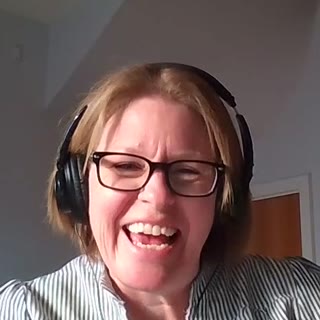
“A school is not a school without children. It is their school. So why not give them the power to make those changes, but in a structured way.”
Lisa Taylor, Headteacher, Halling Primary School
- School
- Halling Primary, Medway
- Setting
- Two-form entry primary
- Pupils
- 400, 18% pupil premium
- Running since
- 2021
The situation
Lisa Taylor arrived at Halling Primary as deputy headteacher in June 2021, and became headteacher the following January. Halling is a two-form entry primary in Medway, right on the Kent border, with around 400 children on roll and about 18% eligible for pupil premium.
What she found was not a school without pupil voice. It was a school with more pupil voice than its structures could hold.
There were an awful lot of young people bursting with ideas, really wanting to have a say in how they could make positive changes to benefit the other children at Halling. Lisa Taylor, Headteacher
The school had a council of the traditional shape: ten to twelve elected children who met to discuss, plan and make changes. It had produced results, and the children involved were proud of them. The problem was arithmetic. Twelve children were in the room. Around 388 were not.
The children themselves wanted more than the model could deliver. Their ideas at that point were concrete and unglamorous: better play and lunchtimes, fundraising through the year, tidying up the school environment, and friendship benches, because the playground is a big space and children lose their friends in it.
So the question Lisa set was a practical one rather than a philosophical one. How do you get 400 voices heard, keep the momentum behind their ideas, and do it without adding a second job to somebody's week?
What they built
Halling adopted a three-part structure. The parts are ordinary on their own. The value is in how they connect.
A comms team that runs it, not a council that decides everything
Twelve children across Years 5 and 6, including the head pupils, form what the school calls the comms team: a small pupil leadership group that picks the question going out to every class, reads what comes back and decides what happens as a result. Their job is not to make the decisions. Their job is to run the process that lets everybody else make them. Halling did not invent a new committee for this. It gave the council it already had a different job.
The recruitment is deliberately formal, and it starts in July rather than September so the team is ready before the new year begins. Year 5 children apply in writing for the role of head pupil against a job description. They are interviewed by the headteacher and the lead teacher. Then they pitch to the whole school in an assembly. Last July, sixteen children stood at the front of the hall with three minutes each, and the school voted.
Halling does not appoint a head boy and a head girl. It elects head pupils, however many and whoever the vote produces.
In September, the elected head pupils recruit the rest of the comms team themselves, and they run it the way the adults ran theirs. They wrote a job description. Children wrote letters of application to the comms team rather than to a teacher. The head pupils shortlisted and interviewed.
That shortlisting turned out to be the most instructive part of the whole process, because it forced a genuinely difficult judgement:
They had to take the emotion out of it. So it wasn't who their best friend was. It was actually about ensuring that they had a range of skills around the table. Lisa Taylor, Headteacher
A class meeting that puts the same question to every child
This is the part that answers the arithmetic problem. The comms team sets a question. It goes out digitally to every class, and the whole school runs it in the same slot, so nobody has to remember to schedule it.
In the classroom a child leads, not the teacher, and the role rotates so it is not always the same confident few. The child opens the question, the class debates the options in pairs or groups, they have to reach agreement, and the leader enters the vote. It works the same way in Year 2 as in Year 6.
The questions are real school business rather than exercises. In one week the school was asked whether golden time should become enrichment time, as part of the annual behaviour policy review. The next, how children wanted to dress for the school's diversity day.
Every class meeting ends with somewhere to put a leftover thought. If a child has a burning idea that the question did not cover, it goes in the ideas box and lands on the comms team's agenda.
The results come back to the comms team, who decide how to tell the school: going round the classes in person and pitching it differently for different ages, taking a whole-school assembly, writing a letter, or posting it on the progress board where any child can go and look at what is being decided and why.
Action teams, so an idea has somewhere to go
The third part is what stops good ideas dying in a meeting. An action team is a group of children who come together to make one specific change happen. Anyone can start one. They need an idea, some other children who care about it, and a member of staff to sponsor them and work through the who, what, why, when and where.
The children fill in an action team form, go and find a staff sponsor, and the form goes to the comms team ahead of their next meeting. The comms team's job is to try to make it happen. The PTA gives them a budget of £500 a year, so approved ideas become real objects rather than minutes.
Crucially, the children know the outcome rests with them. It works if they make it work.
What changed
The clearest evidence is the list of things that now exist at Halling because a child suggested them:
- Friendship benches. Fundraised for by the children, match-funded by the PTA. Two rainbow benches now sit on the playground for anyone who has lost their friends.
- A fourth school house. Children asked why there were only three, and why the names had nothing to do with Halling. That became a competition, a set of names with historical links to the area, a logo design, and house colours. Then they came back and asked to wear house colours on PE days.
- A fruit trolley. Key Stage 2 children wanted fruit at break. They fundraised for a trolley and now run the weekly order themselves, closer to Young Enterprise than to a tuck shop.
- Clubs that children run. Birdwatching at lunchtime. Mindfulness colouring, with beanbags bought from the comms team budget. A Harry Potter club.
- A charity bake sale, raising money for a local hedgehog rescue.
Ofsted noticed the structure, and named it:
Pupils play an active and valued role in school life. The 'smart school council' ensures every pupil has a voice in creating a happy and harmonious environment. Ofsted, Halling Primary School inspection report
Ahead of the interview, Lisa asked the children themselves what makes the comms team work. Their answers are worth reading in their own words, because they describe the thing more precisely than an adult would:
It's important to know that your opinion matters. We always use fair voting and make sure every voice is heard. We even help shy children find their voice. We bring ideas to life and make things happen. Members of Halling's comms team
What Lisa would say to another head
Her framing is simple, and it is worth sitting with, because it explains why the structure matters rather than just what it is:
A school is not a school without children. It is their school. So why not give them the power to make those changes, but in a structured way with that kind of tolerance and respect that's so important. Lisa Taylor, Headteacher
The structured part is not a caveat. It is the whole mechanism. Children do not get to act on a rash idea; they take it back to the drawing board and think through the parts. That is what turns a wish into a friendship bench.
One warning from Halling's experience: the action teams are the advanced stage, not the starting point. The school did not begin with birdwatching clubs and fruit trolleys. It began by getting every class heard on one question, and built from there.
What another school could copy
- Elect your pupil leaders in July, not September. Halling moved its election before the summer break so the team is formed and working within the first fortnight of the new year, rather than losing half a term to setting up.
- Let the pupil team recruit the rest of the pupil team. Halling's head pupils wrote their own job description, read the applications and ran the interviews. Shortlisting on skills rather than friendships is a real lesson, and they learned it by doing it.
- Give every class the same question at the same time. One slot, whole school, so it becomes a fixture rather than something to remember.
- Put an ideas box at the end of every class meeting. That is where Halling's action teams come from: the leftover thought a child had after the vote.
- Give the pupil team a budget. Halling's PTA provides £500 a year, which turns approved ideas into things that actually appear in the playground.
The full conversation with Lisa
This case study is drawn from a recorded interview. Watch it, or listen to the episode.