SEMH · Barnsley, South Yorkshire
How Parkhouse School made every pupil's vote an individual one, and started scaling it across 25 schools
Parkhouse is a small SEMH school where pupils need support to discuss, disagree and be heard. This is how the school built a structure that records every pupil's own vote rather than a group one, links world debates to changes they can make locally, and is now being trialled across the whole trust.
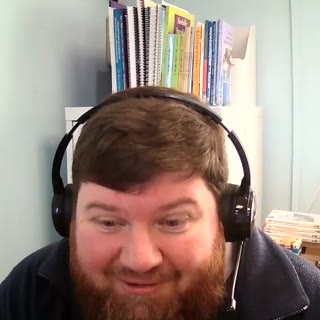
“It's their school. It's not my school, it's theirs.”
Damien Cresswell, Associate Head, Parkhouse School
- School
- Parkhouse School, Barnsley
- Setting
- SEMH school, opened 2015, up to 24 pupils
- Class meetings
- Every other week, tutor groups of no more than five
- Trust
- Keys Group, 25 UK schools plus Alpha outreach
The situation
Damien Cresswell is Associate Head at Parkhouse School in Barnsley, South Yorkshire. Parkhouse is part of the Keys Group education division, which runs 25 schools across the UK for pupils with social, emotional and mental health needs. Parkhouse is one of the smallest, with up to 24 pupils. Some of the group's schools take up to 100.
He trained as a primary teacher and spent six years in a mainstream primary classroom before moving to Parkhouse when it opened in 2015. He is approaching his tenth year there.
The school follows the national curriculum and offers GCSEs, but delivers it in small groups with staff trained in therapeutic approaches, and chunks the curriculum into shorter bursts of learning because longer lessons are hard for the pupils. That is blended with outdoor and enrichment work through Peak Education, the group's activity centres.
When Damien started thinking about how to gather pupil voice at Parkhouse, his reference point was the model most of us recognise:
A student council is usually the same students all the time, every year being elected, coming up with the same ideas of wanting a swimming pool and a football pitch and going to a theme park every week. Damien Cresswell, Associate Head
His verdict on it was blunt. It never felt like it had a true impact, never really improved the educational experience for the children, and did not equip them with what they needed going forward on how to put ideas across and how to pursue something.
So he researched alternatives, looked at different models, and tried several things. Smart School Council came up repeatedly from schools that were already using it. What made him try it was the shape of the thing:
An approach that made sense because it was involving everybody and it was developing lifelong skills of debate and speaking and listening and discussion. Damien Cresswell, Associate Head
He went in unsure whether it would work in a specialist setting. It has.
What they built
Class meetings in tutor groups of five
Parkhouse runs its class meetings every other week, half the school at a time, so across a fortnight every pupil has been heard. They happen in tutor groups of no more than five pupils.
That group size is doing real work, and not only for confidence:
They're done in tutor groups, so they're done in small groups of no more than five pupils together. So it means that when we get to the voting aspect of the class meeting, we can get individual votes as opposed to group vote. Damien Cresswell, Associate Head
For a school whose pupils often have communication and interaction needs alongside SEMH, the meeting itself is the teaching. Damien describes it as giving pupils a model and a structure for how to discuss with their peers, how to listen, how to deal with conflicting opinion, how to be respectful, and how to be open to their own opinion changing when new information arrives.
That last part is the hardest and the most worked on:
Particularly when we're working with pupils with a diagnosis of autism, for example, who might have a really fixed mindset on a particular topic, helping them to develop those skills of being a little bit more open. Damien Cresswell, Associate Head
Parkhouse pupils are all verbal. Other schools in the group have non-verbal pupils, and Damien has been working with Karen from the Smart School Councils team on ways to use the programme with them. His account of that is honest rather than tidy: sometimes it works, sometimes it doesn't, it takes time, and it is something they are still evolving.
Big debates that come back down to school level
Parkhouse uses the question bank, and links questions to what is actually happening in the world. Debates have covered changes in government, events in America, the war in Ukraine, and closer to home how funding could be used in school or in the community.
The connection to the open forum part of the meeting is the bit worth copying. Pupils debate a national or global issue, then are asked openly what improvements could be made here.
Recycling is the clearest example. Pupils raised that the school could do more, so staff opened with news articles and research, then brought it down to what could be put in place locally. As Damien puts it, it made those global issues more contextualised for them.
It also solved the swimming pool problem:
That really does then stop those really bizarre requests of can we have a pool? Because it then gives it some direction. Damien Cresswell, Associate Head
The next step: a comms team of their own
Parkhouse has deliberately built in this order. The class meetings came first, and a pupil comms team is what comes next.
A comms team is a small pupil leadership group that picks the question going out to every class, reads what comes back and decides what happens as a result. For most schools it is not a new committee: it is the school council they already have, given a different job. Parkhouse is working towards that, and the cohort changes year on year, so the shape of it will too.
Damien's read is that the class meetings are the route to it rather than a substitute for it. The debate, discussion, speaking and listening are building exactly the confidence and communication skills pupils need to run it themselves, which in a SEMH setting is the work, not a prerequisite to it.
Adapting it with support, rather than being handed a programme
The thing Damien names first when asked why it works in a specialist setting is the support that comes with it. Karen is his point of contact and they meet regularly to work through what the setting and the pupils' needs make difficult.
Karen is very much supporting us in how we mould it, not saying well this is how it should be, this is how it was designed. It's how do we use that model in a way that works for us. Damien Cresswell, Associate Head
What changed
Inside Parkhouse, the small groups have changed who speaks. Pupils are less daunted and more willing to speak up, and Damien describes them as very vocal and enjoying expressing their opinion. The work has shifted to the harder skill of listening to somebody else.
Pupils are also making the link themselves between a debate and an action. They are getting much better at taking something global or national and thinking about how to apply it to their own school.
The bigger change is at trust level. Keys Group is now looking at how to use the same approach across all 25 schools and Alpha, its alternative learning outreach programme, collating pupil voice across every setting and taking group-wide decisions from it. Damien's directors of education and governing body have been asking how it could be used that way, and he and Karen have been trialling options.
Over the next term, that's going to be our focus of how can we widen this and start to have debates with all of our pupils in all 25 of our schools, not just in one. Damien Cresswell, Associate Head
What interests him most is the comparison it makes possible:
That would be really interesting to start sharing that data so that the pupils can not just see how their pupils are responding in their own school, but how are other schools responding? And is there a difference in response depending on where in the country you are or the age of the pupils? Damien Cresswell, Associate Head
The first group-wide questions he expects to ask are practical ones: what the central team needs to be aware of, and what they could invest more money or time in to improve day-to-day life across the settings. After that, the bigger debates, feeding into curriculum and how staff work with pupils.
Beyond the trust, he wants to widen the same model to parents and the community, on the grounds that what pupils bring to a debate usually started at home.
What Damien would say to another school
His answer to why any of this matters is the shortest thing he says, and the one worth keeping:
It's their school. It's not my school, it's theirs. Damien Cresswell, Associate Head
His advice to other schools, settings and groups is equally short:
Give Smart School Council a go. I absolutely advocate it. I think it really works. Give it a go. Take the plunge. It's really easy to set up, really easy to get started with. And it really does ensure that everybody's voice is heard. But however you're doing it, I just encourage everybody to listen to the pupils, listen to what they're telling you and act on it. Damien Cresswell, Associate Head
One caveat from Damien himself, offered without being asked: a smaller setting does make it easier to be sure everyone is listened to. He has not run it in mainstream. But he has read about and heard from schools using it at scale, and can see how the same structure gives everyone the chance to be heard.
What another school could copy
- Run class meetings in the group size your pupils can actually manage. Parkhouse uses tutor groups of no more than five, and pupils tell Damien they feel less daunted and more willing to speak up in a group that small.
- Record individual votes rather than one vote per group. Because Parkhouse meets in fives, every pupil's answer goes on the record separately, which matters when the whole point is that nobody gets spoken for.
- Cover the whole school over a fortnight instead of trying to do everyone at once. Parkhouse runs half the school one week and half the next, so over a two-week period they have heard from everybody.
- Use a world or national debate as the way in, then ask what could change here. Linking pollution in the news to what the school itself could recycle is what turned vague requests into ideas staff could act on.
- Expect the pupil teams to take time. Comms teams and action teams are the part Parkhouse is still building, and the class meetings are what develop the skills pupils need to run them.
The full conversation with Damien
This case study is drawn from a recorded interview. Watch it, or listen to the episode.