SEMH · Wirral, North West England
How The Observatory School made talking the missing piece of its literacy strategy
The Observatory School had a strong school council and a serious literacy problem. Reading ages were low, writing was stuck, and pupils who had arrived believing nobody listened to them were not about to speak up in front of their peers. This is how one weekly slot started to change both.
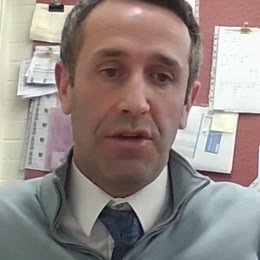
“If we can get our young people speaking about what they're needing to write or what they're going to read about, it just removes that whole anxiety and it removes that barrier.”
Danny Hart, Head of Literacy, The Observatory School
- School
- The Observatory School, Wirral
- Setting
- SEMH provider, three campuses plus off-site teaching
- Pupils
- Almost 200 on roll, up from around 50 two and a half years ago
- Starting point
- 52% of pupils at a reading age of nine or below
The situation
The Observatory School is an SEMH provider on the Wirral and one of the largest in the country, with almost 200 pupils across three campuses, one secondary, one primary and one bespoke campus taking either age depending on need, plus some teaching off site in local libraries and community centres. Danny Hart joined as Head of Literacy two and a half years ago, after 19 years in primary mainstream.
He did not inherit a school without pupil voice. A well-established school council had a real say and had fed into school uniform and educational visits. The problem was reach: not everybody felt they had a voice. That matters more here, because of what pupils bring with them into an SEMH provision.
They generally have this idea that their voice hasn't been listened to, that their needs maybe not have been met in education prior. Danny Hart, Head of Literacy
The school was also writing a new literacy strategy, and the data underneath it was hard reading. A couple of years ago 52% of pupils had a reading age of nine or below. No pupil on site was working at GCSE level. On writing moderation, the majority were at the end of Key Stage 1 or the beginning of Key Stage 2.
Both problems pointed the same way. Oracy needed to be more visible around school, and it needed a structure.
What they built
A weekly class meeting on every campus
Danny administers the account and sends the debate out to every class on a Monday, to be completed by the end of Friday. That weekly rhythm is his school's own rather than a requirement of the programme, and the point is the window rather than the deadline: class staff pick the moment that suits their group. All three campuses take part.
Modelling, class team by class team
The trial started with a handful of classes across both main sites, and the first finding was that it needed a lot of modelling.
Our pupils traditionally weren't confident in speaking in front of their peers, never mind in the wider world. Danny Hart, Head of Literacy
He introduced it in a staff meeting using the resources on the site, then trained staff in their own classroom teams rather than all together, because each class has its own bespoke needs and what works in one room does not always translate into the next. Standing in a hall in front of 30 staff telling them how to deliver it, he says, would not have worked here.
So a walk round shows different things in different rooms. In one, a teacher and one or two TAs introduce the debate, give context and key facts, offer their own view, then probe gently towards the more confident pupils. The quiet pupils still count as taking part.
The fact that the less confident children are engaged by listening. So they've been exposed to the conversation is a real win for some pupils. Danny Hart, Head of Literacy
Some have since started joining in at a simple level. Other rooms look nothing like that: Danny sat in on a Year 9 lesson where pupils ran the whole thing themselves. The original school council members became the communication leads in their own classrooms, which is what makes that handover possible.
Ready-made packs, so nobody has to plan it
The first question Danny was asked was about workload and losing a lesson to it. The teacher pack, with its video, answered that. It is fully resourced, and it breaks the same debate down so it can be run in 15 minutes, half an hour or a full lesson.
There's no added workload. It's all resourced. It gives the fidelity. Danny Hart, Head of Literacy
Three versions of one session in a single pack is what he calls the biggest barrier removed, and it is why staff bought in.
School improvement questions, roughly half-termly
Danny bought in partly for the school improvement side, and is honest that it is not where the early value came from. The debates landed first. Those questions now go out every half term or so, when there is something real to decide. The clearest example is school dinners: after a change of lunchtime provider, pupils were asked about the menu and created their own. That is not a soft win here, because staff need pupils to eat so that they can be medicated.
What changed
Danny sees more confident pupils around school, more willing to speak up for themselves than they would have been. The bigger change was to literacy.
I feel like oracy is the piece, the jigsaw that's sometimes lost within literacy. Danny Hart, Head of Literacy
Teachers are quick to expect a lengthy piece of writing or a lengthy text full of subject specific vocabulary, he says, and the talking that should come first gets forgotten.
If we can get our young people speaking about what they're needing to write or what they're going to read about, it just removes that whole anxiety and it removes that barrier. Danny Hart, Head of Literacy
A couple of terms in, the school is already seeing higher quality writing across the secondary site, and impact on reading in engagement and in pupils summarising what they have read. It shows up, Danny says, in them as a writer, a reader, a scientist, a historian, and in becoming a more confident member of the school community.
Vocabulary comes with it. A debate on whether the UK should change the way elections are delivered turned up the word manifesto, which the Year 9 class had not met. One pupil went on to write his own manifesto for the school, and the lesson opened out into what Labour, the Conservatives and Reform UK stand for.
The example Danny reached for first, though, was a Year 11 who had disengaged from literacy and was refusing the classroom, because he could not read and write. He had a one to one TA. They used the framework, the discussion questions on the site and questions they wrote themselves, and the regularity did the work: weekly, routine, consistent, a safe place to talk. He has since gone on to college, where he is doing well.
He's still in touch with the school and he pins it on talking and having someone there to talk to him about what he's thinking, how he can get it on paper. And in him applying for college, that's really helped him. And I strongly believe without having that framework in place, that pupil wouldn't have been successful in getting the college place that he's got. Danny Hart, Head of Literacy
Next comes a literacy strategy rewritten with oracy as the overarching theme across every subject, the school improvement side brought back in, and action teams handed to the communication leads. The school has not started action teams yet, and that is deliberate.
What Danny would say to another school
His advice is about sequencing, and it is the opposite of what most schools do with a new purchase.
I think the temptation when you buy into a new package is we've got access to all of this. Let's throw all of this out there at once. Danny Hart, Head of Literacy
His alternative is to look at the different elements, work out which will give you real impact, hone and focus and celebrate that one first, and snowball from there.
Underneath it is a simpler idea, and it is what he thinks has shifted things for pupils who arrived expecting not to be heard: that they are listened to, and their voice does matter. The school will not always say yes, but it will take their opinions on board.
Anyone who's questioning buying into it, my advice would be give it a go because we've seen in a real challenging setting, real success. Danny Hart, Head of Literacy
Danny has an open invitation out to other schools: contact The Observatory School, or come and see it running.
What another school could copy
- Train class teams separately rather than briefing the whole staff in a hall. The Observatory found that each class has its own bespoke needs, so what works in one room does not automatically transfer to the next, and the class staff are the ones who know which version will land.
- Count listening as taking part. In an SEMH setting a pupil who stays in the room and follows the discussion is a genuine win, and several of those pupils have since started joining in at a simple level.
- Start with the debate questions and add the school improvement ones later. Danny ran the topical debates first, built engagement across all three campuses, then opened up school improvement questions roughly half-termly once the habit was in place.
- Use the ready-made teacher pack to answer the workload objection before it is raised. Each pack comes with a 15 minute, half hour and full lesson version, so staff pick the shape that fits the day instead of planning anything, which Danny calls the biggest barrier removed.
- Keep the school council you already have. The Observatory's elected members became the communication leads in their own classrooms, so nobody lost a role and the pupils with the most experience became the ones modelling it for everybody else.
The full conversation with Danny
This case study is drawn from a recorded interview. Watch it, or listen to the episode.